På anklagebænken

Dér sad de - de personer, der for få år siden sad med magten over millioner af mennesker. Paladinerne eller Guldfaserne som de hånligt blev kaldt. Personer, der ikke havde tøvet med at anvende den, hvis de fandt det nødvendigt. Enten af hensyn til staten, partiet eller sig selv. I stedet skulle de nu stå til ansvar for deres handlinger - tiltalte for at have begået krigsforbrydelser. Og forsøgt fældet med egne dokumenter.
Af Erik Ingemann Sørensen
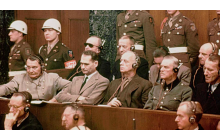
 Dag efter dag måtte de anklagede møde op og forsøge at slippe uden om de grusomme gerninger, de havde begået. Foto: HPN.
De anklagede
Hermann Göring: 53/138 Reichsmarschall
Rudolf Hess: 52/120 Rigsminister og Hitlers stedfortræder
Joachim von Ribbentrop: 53/129 Udenrigsminister
Wilhelm Frick: 79/124 Indenrigsminister
Walter Funk: 55/124 Rigsbankpræsident
Karl Dönitz: 54/138 Storadmiral og øverstbefalende for Krigsmarinen. Af Hitler udnævnt til hans efterfølger
Erich Raeder: 75/134 Storadmiral og øverstbefalende for Krigsmarinen frem til 1943
Wilhelm Keitel: 63/129 Generalfeldmarskal, chef for hærens overkommando.
Alfred Jodl: 55/127 Generaloberst og chef for Oberkommando Wehrmacht
Ernst Kaltenbrunner: 42/113 SS-Obergruppenführer, Chef for SD
Hans Frank: 45/130 Generalguvernør i det besatte Polen
Julius Streicher: 61/106 Redaktør ”Der Stürmer”.
Baldur von Schirach: 38/130 Rigsungdomsfører, Gauleiter i Wien
Fritz Sauckel: 51/118 Generalbefuldmægtiget for arbejdsindsatsen siden 1942
Frantz von Papen: 66/134 Tidligere Reichskanzler til 1933. Ambassadør
Arthur Seyss-Inqvart: 53/141 Rigskommissær for det besatte Holland
Albert Speer: 40/128 Rigsminister for rustning. Organisation Todt
Konstantin von Neurath: 73/125 Rigsprotektor for Böhmen - Mähren
Hans Fritsche: 46/130 Leder af radioen i Rigspropagandaministeriet
Robert Ley: 57/? NSDAP - rigsleder. Fører for den tyske arbejdsfront
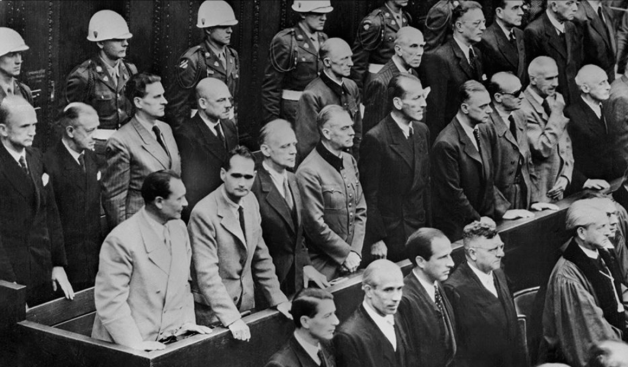 De engang så mægtige herskere måtte nu indordne sig efter rettens regler. Foto: HPN
De anklagedes IQ var blevet målt i fængslet. Tallene er ganske interessante, da de afslører, at samtlige overraskende nok ligger over den gennemsnitlige intelligenskvotient. Den er sat til at være 100. Så hvor man måske forventede, at i det mindste nogle af dem måtte være fra den lavere del af skalaen, så ligger de anderledes.
Det gør det endnu mere vanskeligt at forstå, at de ikke sagde fra.
Uddrag af retsbogen den 11. marts 1946
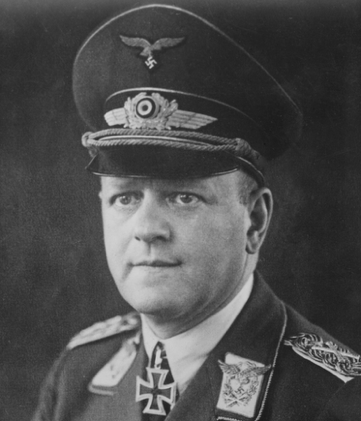 Erhard Milch var generalinspektør ved Luftwaffe
DR.KAUFMANN: You have just mentioned that the question had been discussed in military circles, among the officers. Later, when you returned, did you convey your impressions of Dachau to anyone?
MILCH: I scarcely mentioned them to anybody, only if my more intimate comrades broached the subject. As I have said before, I did not go alone; there were several other gentlemen with me and, no doubt, they too must have had occasion to discuss this subject in smaller circles.
DR. KAUFMANN: Unheard of acts of cruelty were perpetrated in the concentration camps. Did you come to hear of them and, if so, when did you first hear of them?
MILCH: On the day on which I was captured it was revealed to me for the first time when internees from an auxiliary camp in the vicinity were led past the place where I was captured. This was the first time I saw it for myself. The rest I learned in captivity from the various documents which we were shown.
DR. KAUFMANN: Then it was completely unknown to you that more than 200 concentration camps existed in Germany and in the occupied territories.
MILCH: It was completely unknown to me. I have already mentioned the two camps whose existence was known to me.
DR. KAUFFMANN: It could be held against you that it must have been impossible not to know of these facts. Can you explain to us why it was not possible for you to obtain better information regarding existing conditions?
MILCH: Because,the people who knew about these conditions did not talk about them, and presumably were not allowed to talk about them. I understand this to be so from a document in the Indictment against the General Staff, in which Himmler -- also, erroneously considered as one of the high-ranking military leaders -- had issued an order to this effect. This document dealt with some conference or other of high-ranking police leaders under Himmler, in 1943, 1 believe.
DR. KAUFFMANN: Am I right in saying that any attempt to disclose conditions prevalent in the concentration camps was impossible unless the person in question was ready to risk his life?
MILCH: In the first place the large number of concentration camps was unknown to everybody, as it was unknown to me. Secondly, nobody knew what went on there. This knowledge was apparently confined to a very small circle of people who were in the secret. Further, the SD was very much feared by the entire population, not only by the lower classes. If anybody tried to gain access to these secrets he did so at the peril of his life. And again, how could the Germans know anything about these things, since they never saw them or heard about them? Nothing was said about them in the German press, no announcements were made on the German radio, and those who listened to foreign broadcasts exposed themselves to the heaviest penalties, generally it meant death. You could never be alone. You could depend upon it that if you yourself contravened that law, others would overhear and then denounce you. I know that in Germany a large number of people were condemned to death for listening to foreign broadcasts.
DR. KAUFFMANN: Did it ever come to your knowledge that there had been mass deportations of Jews to the Eastern territories? When did you first hear about it?
MILCH: I cannot give the exact date. Once, in some way or other, I can no longer remember how, the information did reach me that Jews had been settled in special ghetto towns in the East. I think it must have been in 1944 or thereabout, but I cannot guarantee that this date is exact.
DR.KAUFFMANN: You have just mentioned ghettos. Did you know that these mass deportations were, in effect, a preliminary step to mass extermination?
MILCH: No, we were never told.
[Historie-online.dk, den 11. marts 2026]